Skip to content



A mirror is a practical addition to the home. We use one to check our reflection before leaving the house, to get ready in the morning or to make sure our outfit is looking its best. Yet, mirrors have a much greater influence than simply showing us what we look like.
From making a room feel larger to brightening a dark corner, the strategic use of reflection can subtly change the way we experience our surroundings. The right mirror can create a sense of openness and even alter the atmosphere of a room.
How does reflection work?
At its simplest, reflection occurs when light bounces off a surface. When light hits a mirror, its surface reflects light towards us, allowing us to see an image of whatever is positioned in front of it.
Unlike a painted wall, which absorbs and scatters light in different directions, a mirror creates a more defined reflection. This means that the eye receives visual information that appears to extend beyond the physical boundaries of the room.
It is this basic scientific principle that makes mirrors so useful in interior design. By reflecting light, views and architectural features, they can influence how we perceive the size, brightness and depth of a space.
In other words, a mirror does not physically make your room bigger, but it can make your brain perceive it as being more expansive.
Why do mirrors make rooms feel bigger?
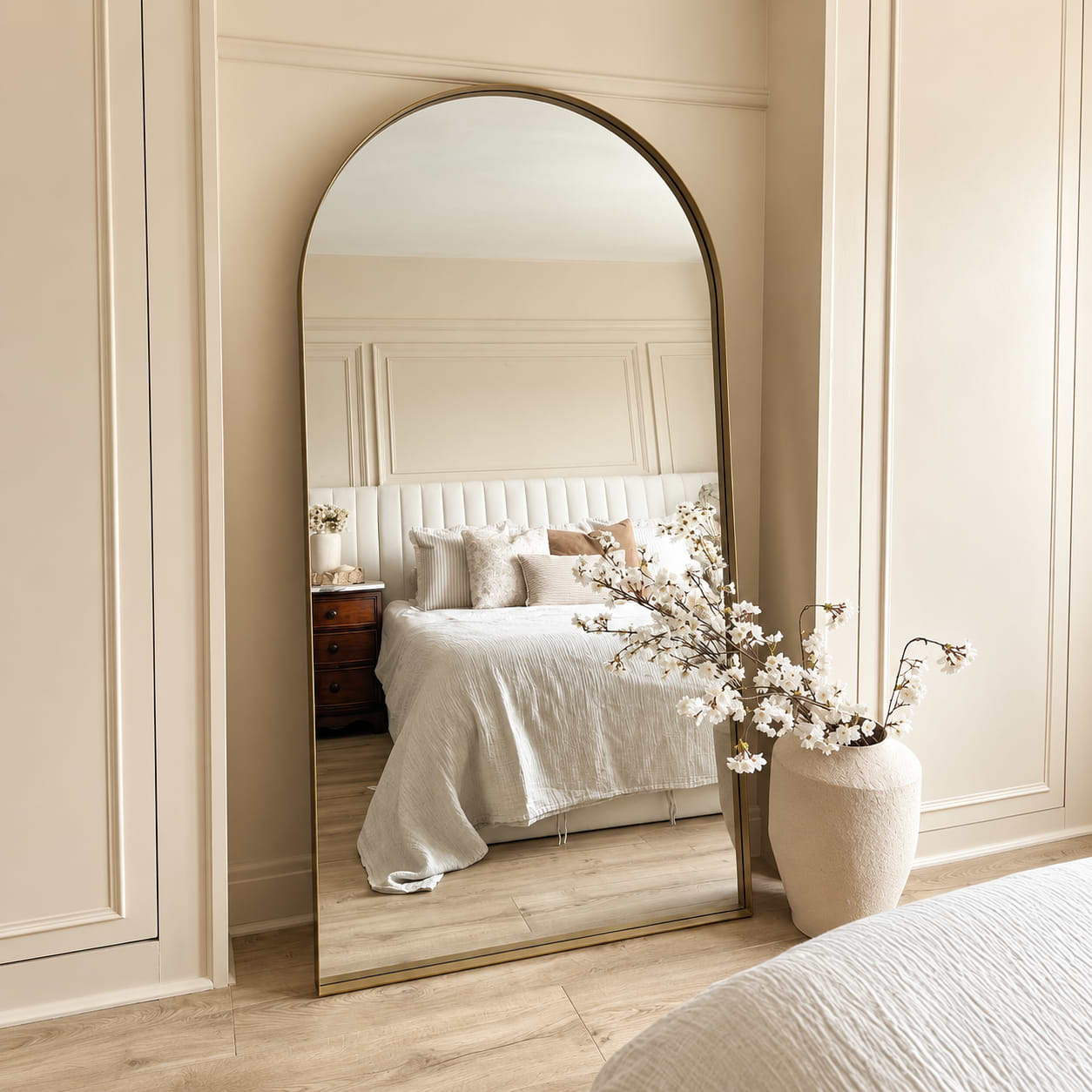
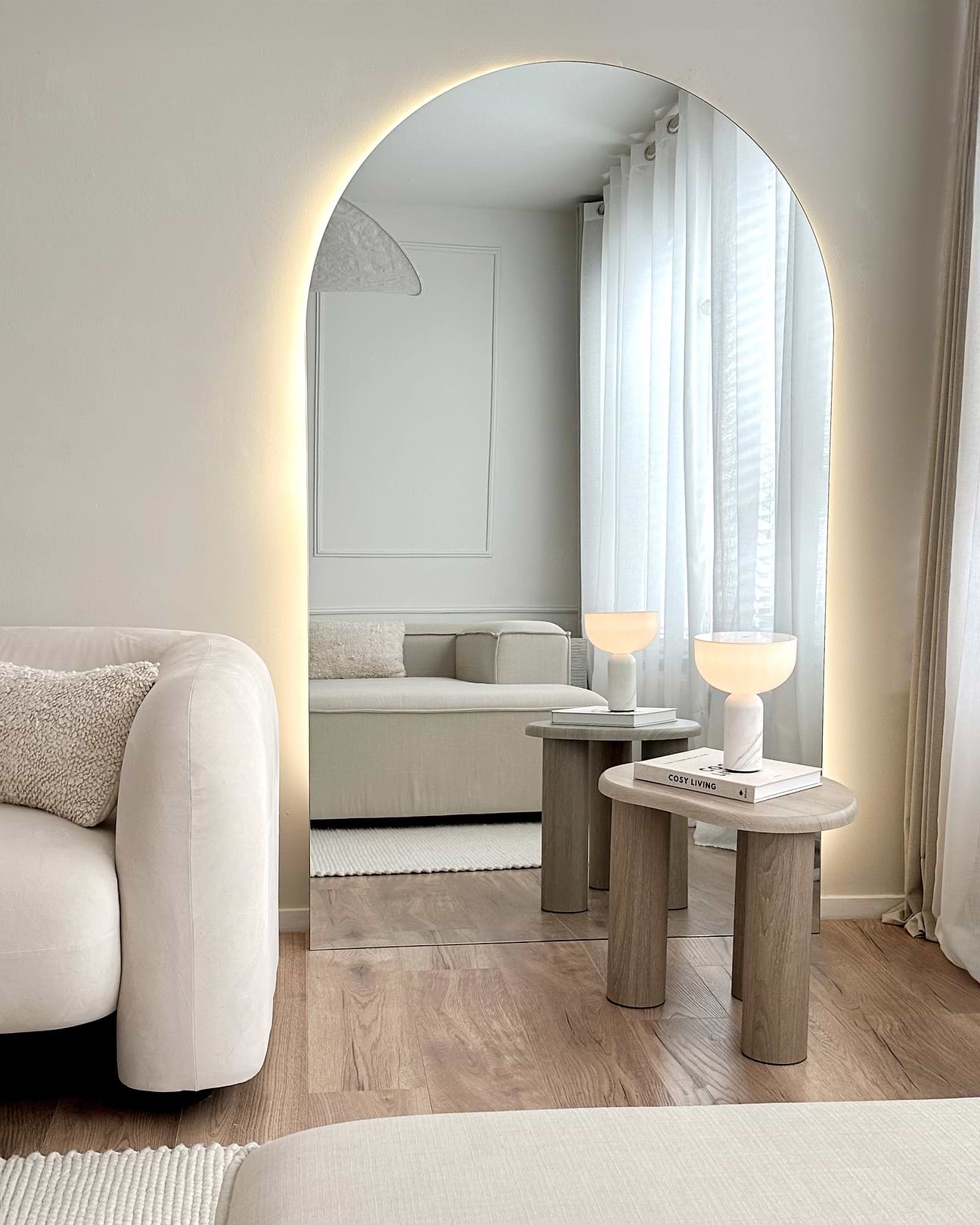
One of the most well-known psychological benefits of mirrors is their ability to create the illusion of additional space.
When you look into a mirror, you see a continuation of the room rather than a solid wall. Your brain interprets this reflected image as visual depth, making the room appear to extend further than it actually does.
This can be particularly effective in smaller homes and rooms. A large wall mirror can visually push back the boundaries of a space, making it feel less enclosed and more open.
For example, placing a generously sized mirror at the end of a narrow hallway can create the impression of a longer corridor. The effect is not just about the size of the mirror itself, either. The design, frame and position all contribute to how the reflection interacts with the rest of the room.
Reflection and our perception of light
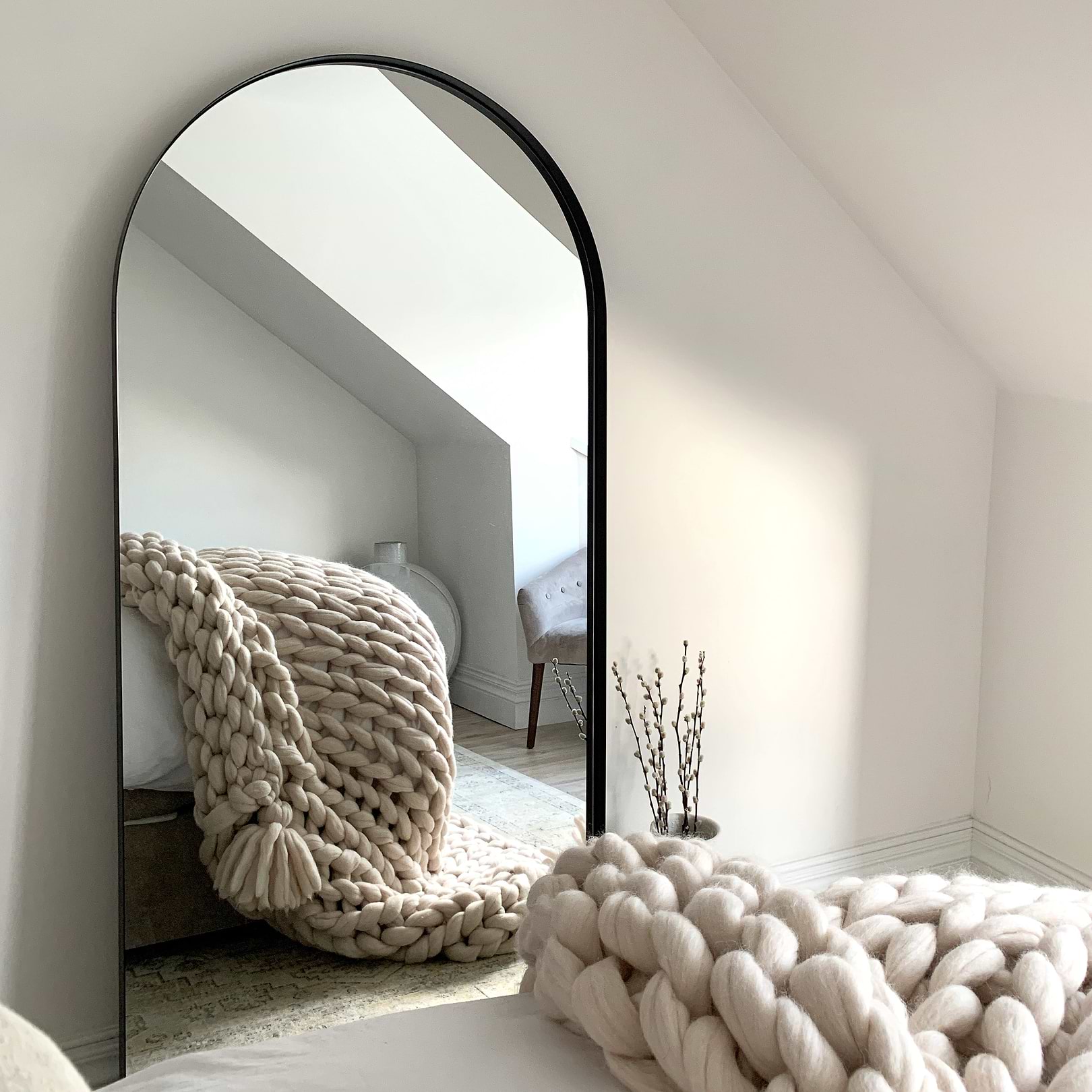
Light has a powerful effect on how we experience our homes. Bright, naturally lit rooms tend to feel more open and inviting, while darker spaces can feel smaller and more enclosed. This is where mirrors can make a significant difference.
Positioned thoughtfully, a mirror can reflect natural light from a window and distribute it around the room. Rather than allowing sunlight to illuminate just one area, the reflected light can help to introduce brightness to other parts of the space.
This does not mean that placing a mirror near a window will automatically transform a dark room. The angle of the mirror, the direction of the light and what the mirror reflects all matter. However, when carefully positioned, a mirror can help to maximise the light that is already available.
The importance of what your mirror reflects
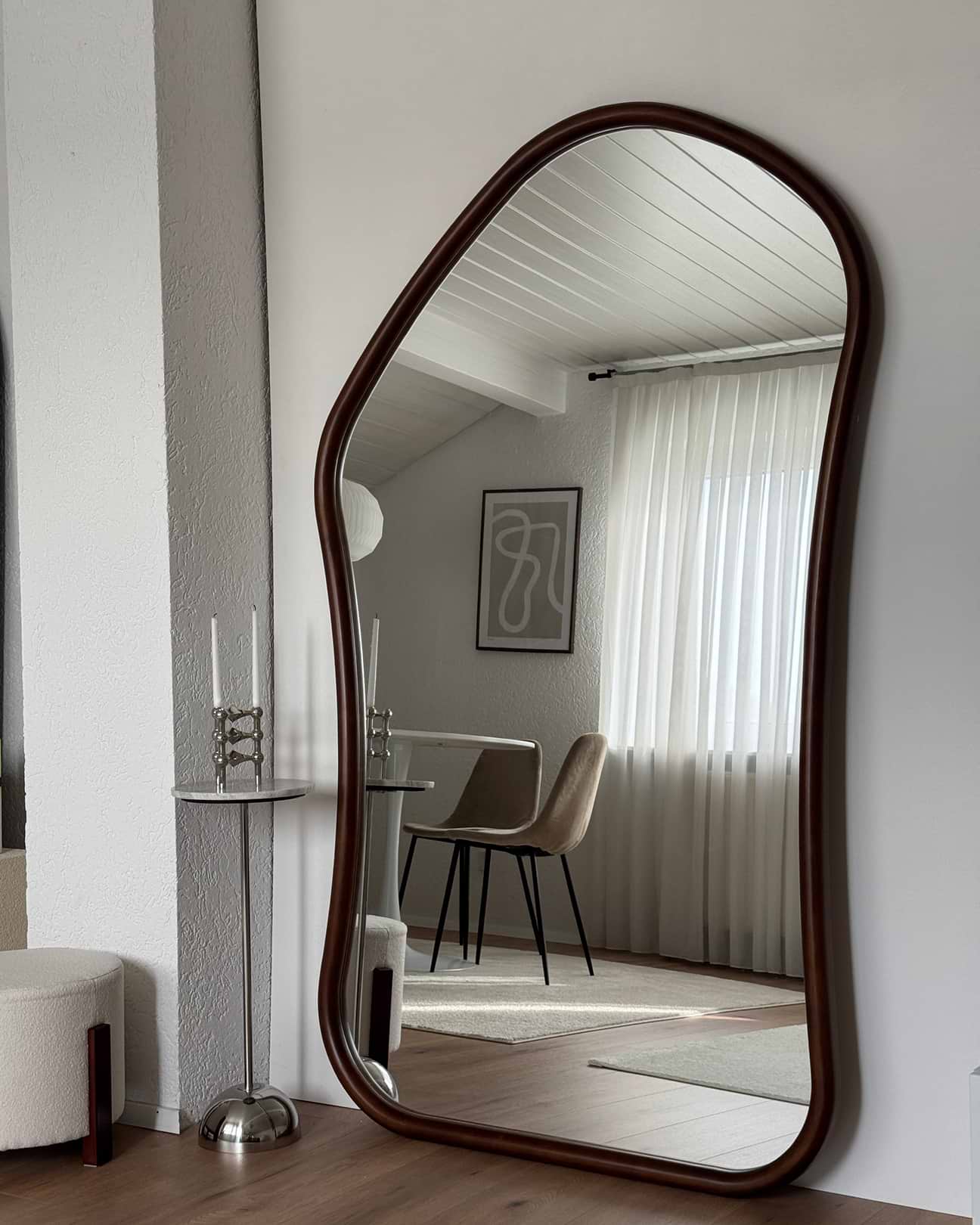
When choosing where to hang a mirror, it is easy to focus entirely on the wall it will occupy. However, the real question should be: what will the mirror reflect?
A beautiful view, artwork or furniture can all become more prominent when reflected in a mirror. This creates a kind of visual repetition. A plant can appear twice, and a window can give the impression of an additional source of natural light.
Mirrors and our sense of self
There is also a more personal psychological element to living with mirrors. Unlike many decorative objects, mirrors can reflect us to ourselves. This makes them uniquely connected to our self-awareness.
We naturally use mirrors to assess our appearance and prepare ourselves to enter the outside world. A mirror in a hallway, for example, becomes part of the transition between home and outside. It is often the last thing we look at before leaving and the first thing we see when returning.
However, this relationship with our reflection can be complicated. While mirrors can support confidence and self-awareness, constantly seeing ourselves is not necessarily beneficial in every context. This is why thoughtful placement is important.
A mirror does not always need to be positioned where you can see yourself. In fact, decorative mirrors placed above a fireplace, behind a sofa or on a feature wall can influence the atmosphere of a room without becoming a constant source of self-observation. This allows reflection to work as a design feature rather than purely as a functional tool.
The emotional impact of different mirror styles
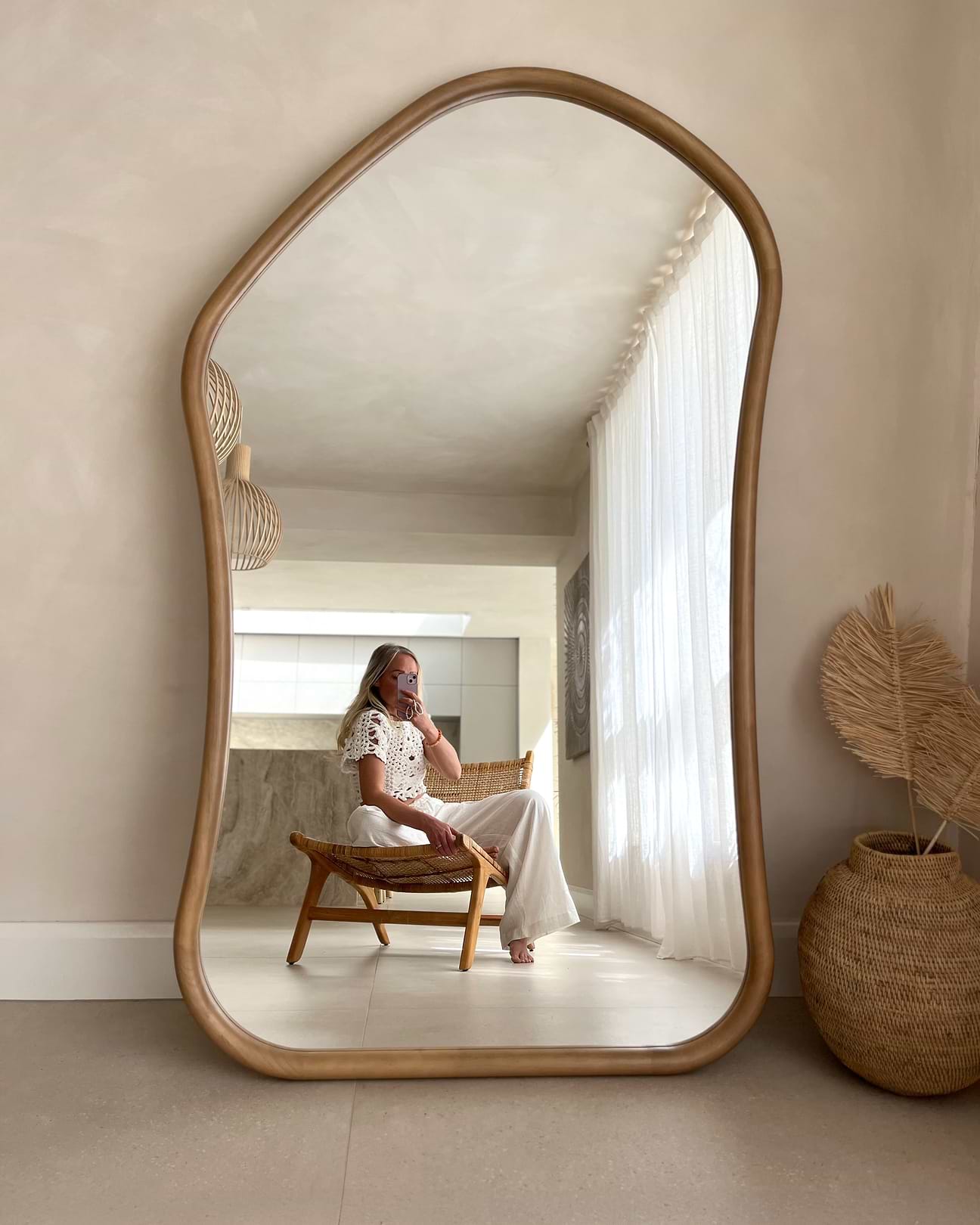
A large, frameless mirror with clean lines can contribute to a sense of calm and simplicity. Whereas an ornate framed design may introduce a feeling of grandeur or luxury.
Rounded mirrors can soften rooms that are dominated by straight lines and hard edges, and tall, vertical designs can emphasise ceiling height. Oversized mirrors can create a big focal point, whereas a collection of smaller mirrors can be more individualistic and add visual interest.
This is why choosing a mirror should involve more than simply considering whether it will fit on a particular wall. Think about the atmosphere you want to create and choose a design that supports it.
Reflection can influence how we experience a room
Interior design is often discussed in terms of colour, furniture and materials, but our perception of a room is shaped by much more than these physical elements.
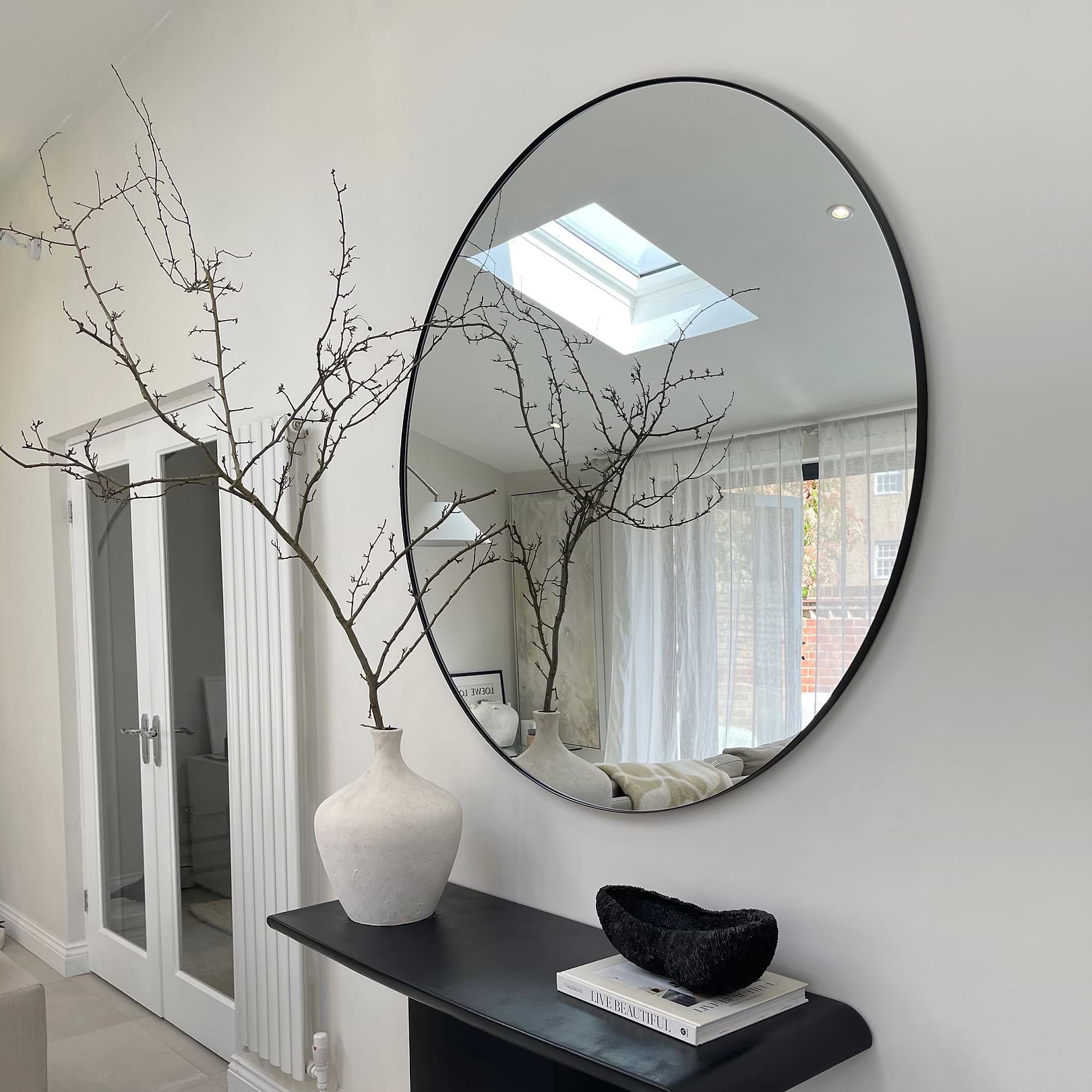
Mirrors can influence the way our brains interpret space. They can create additional visual depth, bounce light around a room and draw our attention towards particular details. These effects can make a space feel brighter, larger and more visually interesting.
Environmental psychology also suggests that our surroundings can influence how we think and behave. Mirrors are therefore an interesting part of the relationship between our homes and our experiences within them. Research highlights that mirrors can influence perceptions of space and can affect behaviour when people see themselves reflected.
The key is to use them with intention. Adding lots of mirrors will not necessarily make a home feel more spacious or sophisticated. Too many reflections can become visually overwhelming, while poorly positioned mirrors may simply duplicate clutter. Instead, consider each mirror as part of the room's overall composition.
How to use reflection thoughtfully in your home
If you want to explore the psychological benefits of reflection, start by considering what you want your room to achieve.
For a small room, choose a larger mirror that can create the impression of greater depth. In a darker space, consider positioning a mirror where it can catch and redistribute available natural light. In a hallway, use reflection to extend a narrow sightline. In a living room, position a statement mirror so that it highlights an attractive view or feature.
Most importantly, pay attention to what the mirror reflects. A successful reflection should add something to the room rather than simply repeating everything within it.