Skip to content



If you've scrolled through home inspiration lately, you've probably noticed a new style of minimalism, one that shies away from monochromatic grey decor to make way for something softer and more considered. That's Japandi decor, a design philosophy born from blending Japanese minimalism with Scandinavian cosiness. Think clean lines, natural materials, and a muted colour palette. It's a style built on restraint, but not coldness.
What is Japandi Style?
Japandi style combines Japanese minimalism with Scandinavian design. At its heart, Japandi takes the Japanese principle of wabi-sabi, finding beauty in imperfection, and natural materials and pairs it with hygge, the Scandinavian love of warmth, function, and uncluttered living.
The result is achieved by using:
-
Natural materials: Wood, stone, linen, and ceramic over plastic or high-shine metals
-
A muted, earthy palette: Light woods, warm neutrals, soft greys, and the occasional dark tone for grounding
-
Organic, imperfect shapes: Curves and irregular silhouettes rather than rigid symmetry
-
Considered, functional pieces: Fewer items, chosen with intention
Japandi styling creates a calm, balanced living space. By focusing on natural materials, neutral colour palettes and thoughtfully chosen furnishings, Japandi interiors feel uncluttered and relaxing while also remaining practical. The result is a timeless aesthetic that promotes a sense of wellbeing and help to create a peaceful retreat that feels removed from the stress of daily life.
How to Create a Japandi Style Room
There are several simple steps that can be followed to bring a sense of Japandi styling into your home:
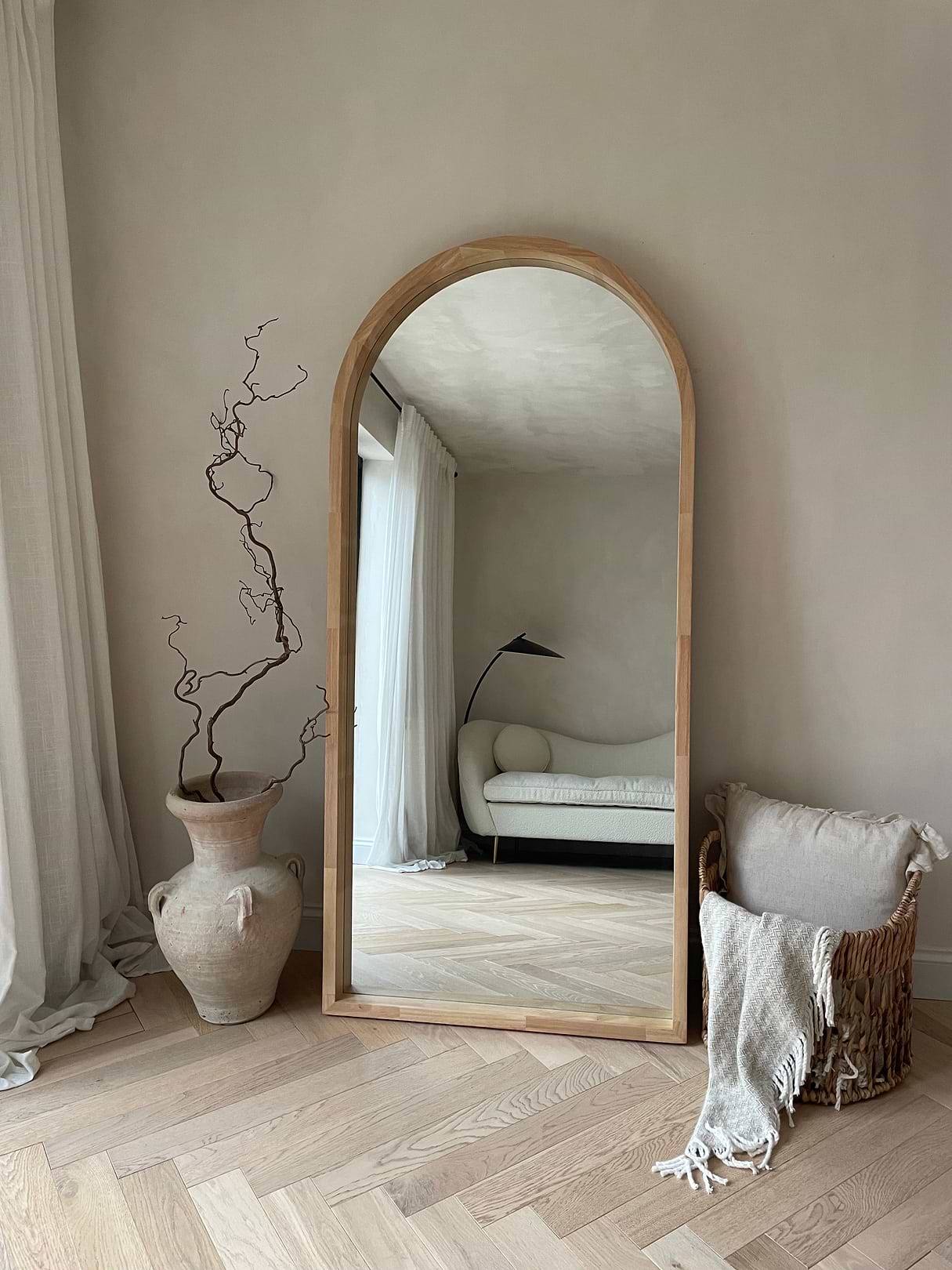
1. Start With a Statement Mirror
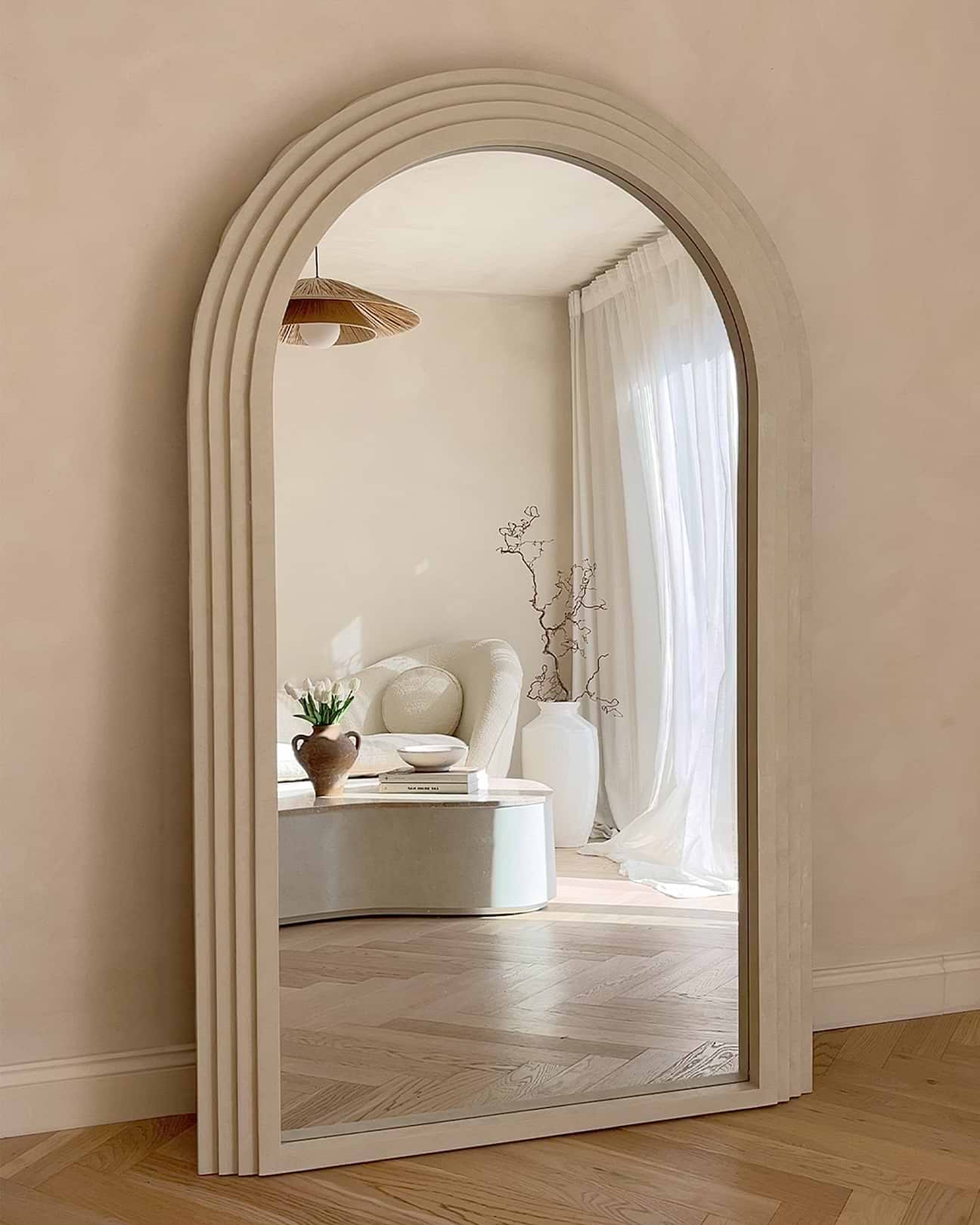
A mirror is one of the easiest ways to set the tone of a room, and an arched, natural wood frame embodies Japandi styling. The Lilia Full Length Light Wood Arched Mirror is a perfect example. Its solid, sustainably sourced wood frame and soft arched shape bring a calm, organic feel to a bedroom or hallway.
2. Let One Piece Be a Little Imperfect
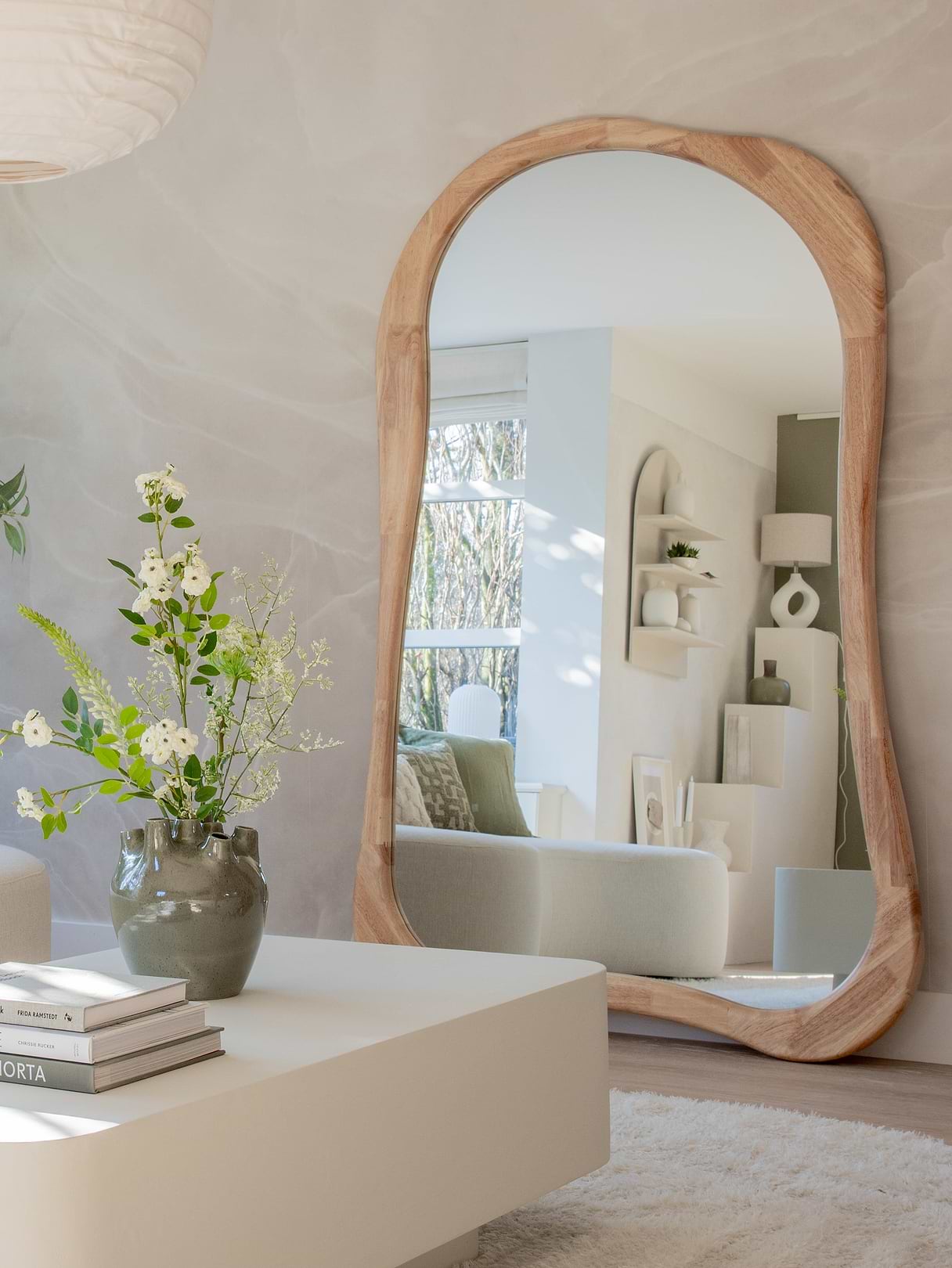
Japandi isn't about perfect symmetry, it leaves room for unexpected statement pieces. The Arcurva Extra Large Light Wood Irregular Mirror embraces this beautifully. Its bold, asymmetric silhouette feels handcrafted, and matches the aesthetics of wabi-sabi styling.
3. Ground the Room With Natural Texture
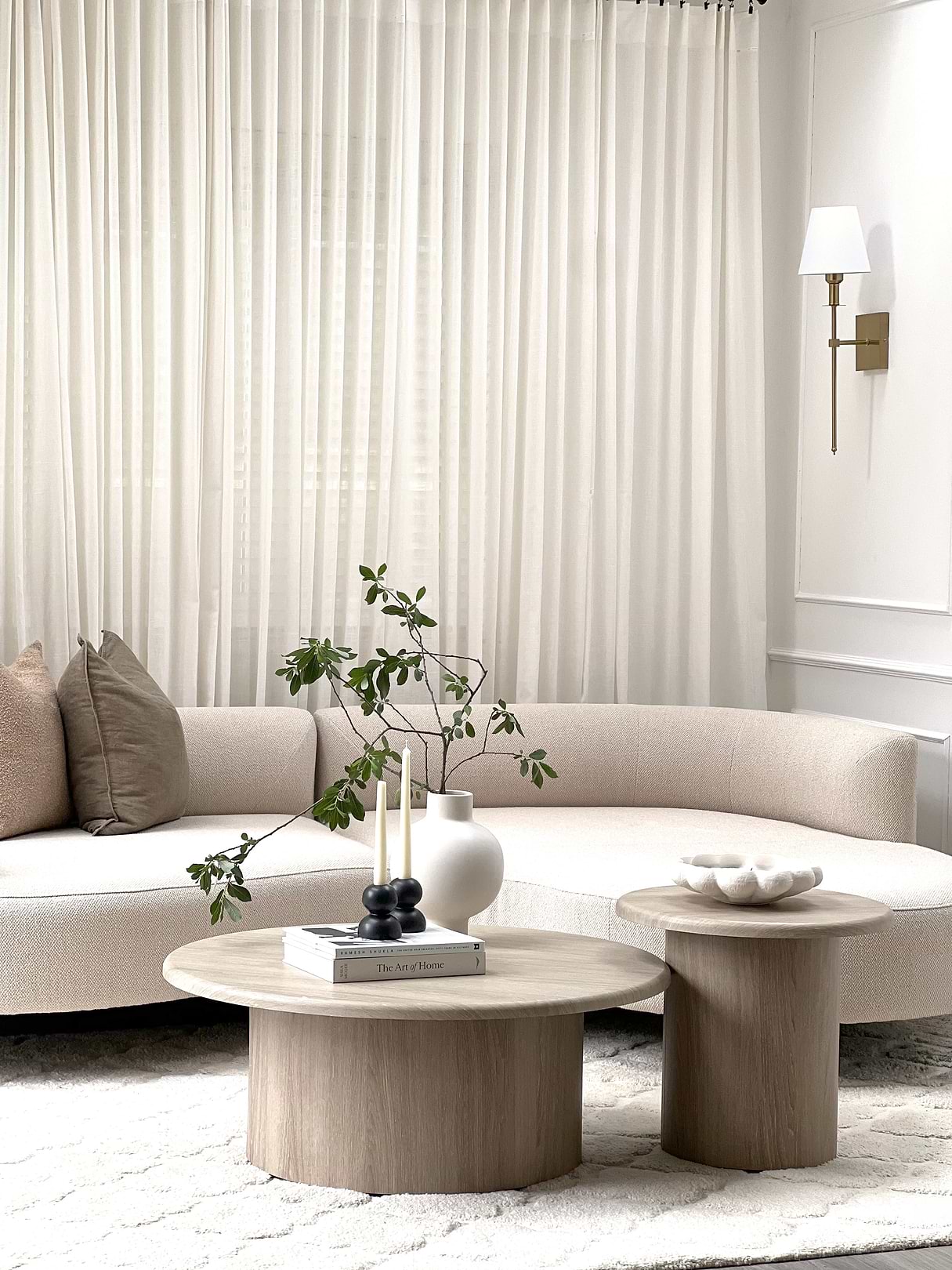
Furniture in a Japandi space often features natural textures that create a functional interior. The Madison Large Washed Wood Round Coffee Table is a perfect example of a piece of furniture that combines these two elements. Its soft, circular form and pale washed finish soften hard lines within a room, while keeping the palette light and airy. Round tables in particular are a Japandi favourite, as they echo the philosophy's preference for gentle, organic shapes over hard angles.
4. Mix Raw and Refined Materials
One of the most distinctive Japandi interior styling techniques is pairing raw, industrial materials with natural wood. The contrast helps to keep a neutral room from feeling flat. An example would be concrete walls paired with light wooden tones. When a full concrete backdrop isn't possible, concrete accents are an easy way to bring a piece of it into your space.
5. Layer in Soft, Warm Lighting
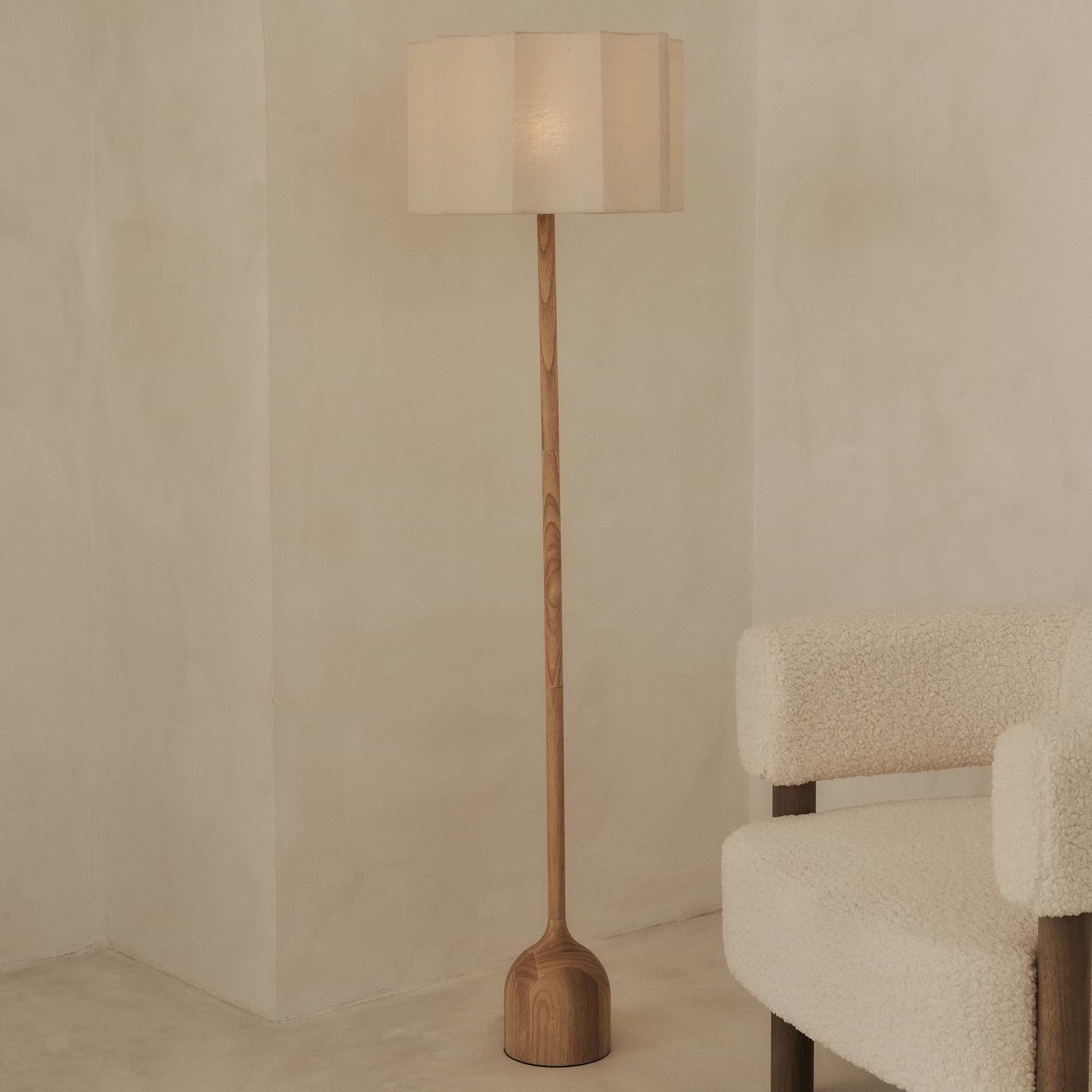
No Japandi room is complete without lighting that feels gentle rather than harsh. Utilising natural light is best, but in the darker areas of your home, the floor lamps can bring the perfect amount for evenings spent unwinding. Lighting like this is where the Scandinavian half of Japandi really comes through.
Bringing It All Together
Japandi style works best when you resist the urge to overfill a room. Choose a few considered pieces such as a sculptural mirror, a textural chair, a softly lit corner, then let the natural materials and quiet palette do the rest. The goal isn't a showroom; it's a space that feels calm, lived-in, and intentional.